4-Hole Polyester, Galalith & Metal Sewing Buttons
4-Hole Sewing Buttons for Shirts, Coats & Knitwear
Buttons may be one of the smallest details in a garment, but they often have the biggest impact on how a piece looks, feels and lasts. At Accessoires Leduc, 4-hole sewing buttons have been part of our haberdashery counters in Brussels since 1951, helping generations of tailors, fashion designers and home sewists finish garments with confidence.
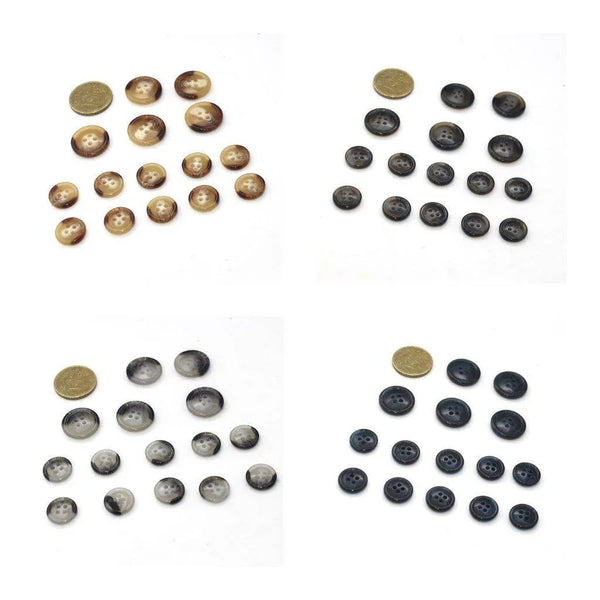
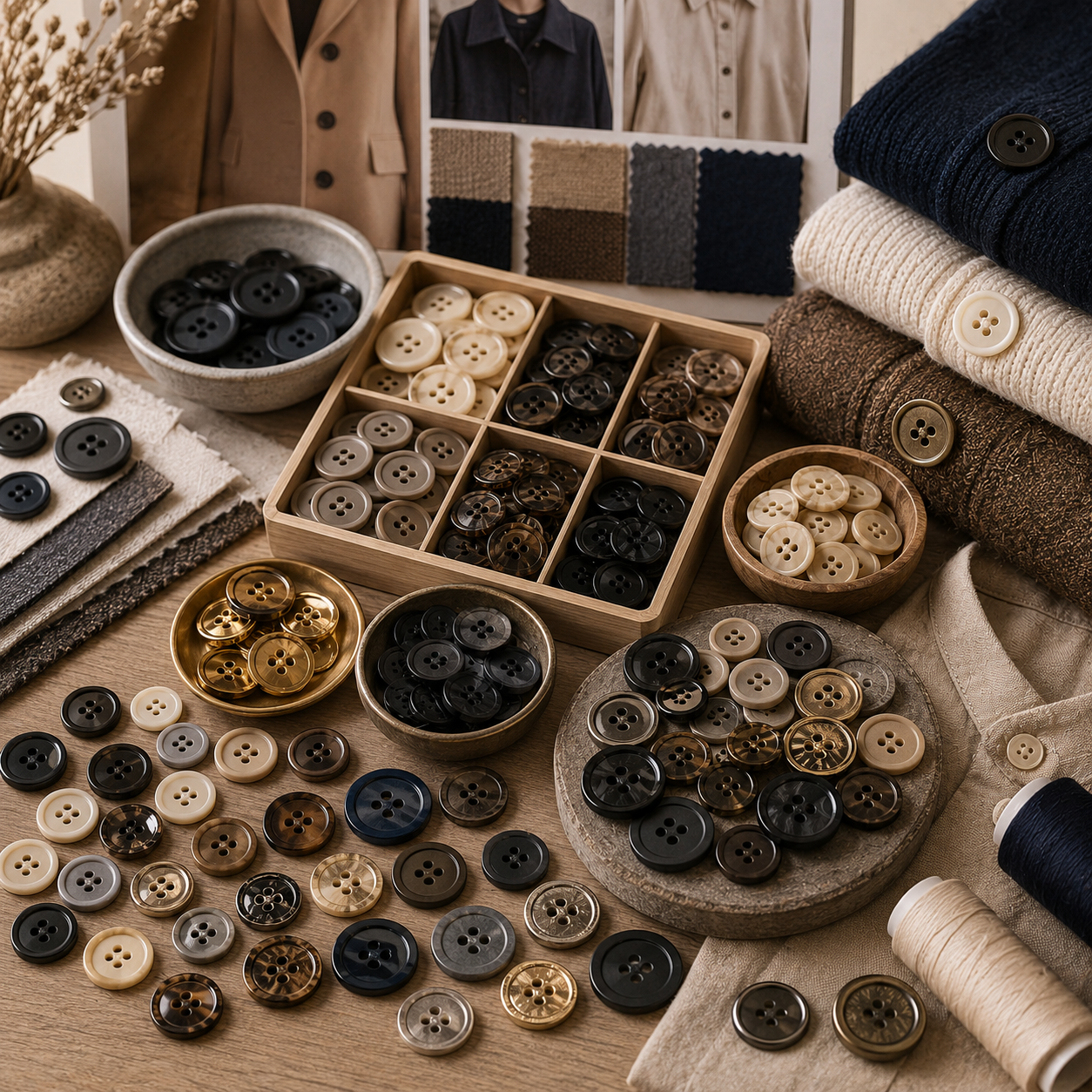
This collection brings together premium 4-hole sewing buttons in polyester, galalith and metal finishes, available in sizes from 9mm to 43mm. Whether you're replacing a missing shirt button, producing school uniforms, creating bespoke tailoring, restoring a vintage coat or manufacturing garments at scale, you'll find durable and professionally sourced buttons designed for both functionality and style.
Trusted by makers across Europe for more than seventy years, our buttons combine reliable performance with carefully selected finishes suited to contemporary fashion, traditional tailoring and everyday clothing repairs.
Buying Guide: How to Choose the Right 4-Hole Button
The best button choice starts with the garment, not the button itself.
Rule #1: Match the button to the garment
Lightweight shirts and blouses typically require smaller buttons between 11–14mm. Polyester buttons are a popular choice because they are lightweight, colourfast and resistant to frequent washing.
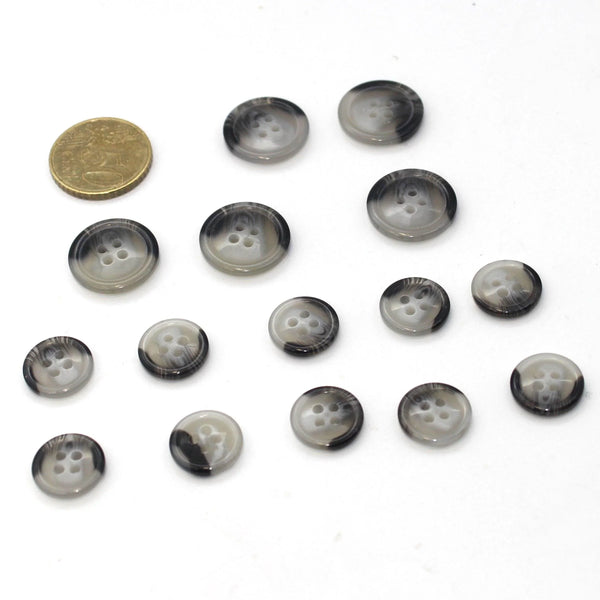
For cardigans and knitwear, galalith buttons offer a refined alternative. Their distinctive marble-effect appearance, smooth touch and natural-looking finish make them especially attractive for premium knitwear and handmade garments.
For coats, blazers and structured outerwear, metal buttons in brushed gold, silver or antique finishes create a more tailored appearance and provide enough visual weight to become part of the garment's design.
Rule #2: Match the button weight to the fabric weight
Delicate fabrics work best with lightweight buttons that won't distort the fabric. Heavier fabrics such as wool coating, denim and canvas can comfortably support larger and heavier buttons that add both functionality and decorative appeal.
Rule #3: Choose the finish before the colour
A matte finish creates a contemporary, understated look. Glossy finishes reflect more light and are often preferred for formalwear and occasion garments. Marble-effect galalith and textured metal finishes introduce visual depth and can elevate otherwise simple designs.
Rule #4: Think beyond today's project
For ateliers, schools, workshops and professional makers, purchasing packs of 10–100 buttons ensures consistency across production runs and provides matching replacements for future repairs. This small planning decision can save considerable time months or even years later.
Most Popular Choices Among Tailors & Makers
Some of the most requested styles in this collection include navy polyester shirt buttons for uniforms and workwear, marble-effect galalith buttons for cardigans and knitwear, and antique gold metal buttons for blazers, military-inspired jackets and vintage coat restorations.
Professional tailors often favour classic dark navy, black and horn-effect finishes because they remain versatile across a wide range of garments. Independent designers, meanwhile, frequently use statement metal buttons as focal design elements that give garments a distinctive identity.
A Material with History: Why Galalith Still Matters
Galalith occupies a unique place in fashion history. Developed in the early twentieth century as one of the world's first synthetic materials, it became prized for its ability to imitate horn, ivory and tortoiseshell while remaining more affordable and accessible.
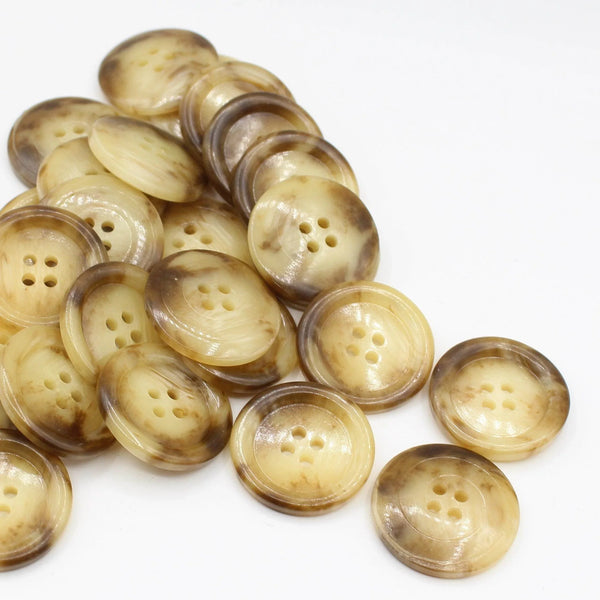
Unlike many modern plastics, galalith develops naturally varied marble patterns, meaning no two buttons are exactly alike. This subtle uniqueness continues to make galalith a favourite among knitwear designers, bespoke tailors and makers seeking a more authentic, heritage-inspired aesthetic.
Collector highlights
Galalith is a quiet piece of design history: developed in the early 20th century as one of the first plastics, it was prized for its ability to mimic horn, ivory and tortoiseshell at a fraction of the cost — and it's still made the same way today, which is why its marble patterns never repeat exactly. Our most-requested finishes are classic navy and beige polyester for school uniforms, and antique gold metal buttons for restoring vintage coats and blazers where the original buttons have been lost.
You might also like
If you're working on a project that calls for a more natural look, our wooden buttons for sewing and knitwear offer a sustainable alternative with the same range of sizes. For a coordinated set of front and cuff buttons on a blazer, see our combination button sets. And if you're stocking up on small notions alongside your buttons, our budget sewing supplies under €3 cover everything from needles to thread.
Shop by Material
Shop by Garment Type
Frequently asked questions
What's the difference between 2-hole and 4-hole buttons?
4-hole buttons distribute stress across more stitching points, making them more secure for garments that see frequent use — coats, school uniforms and workwear. 2-hole buttons are often chosen for a more decorative or vintage look, particularly on shirts and blouses.
What size button should I use for a shirt?
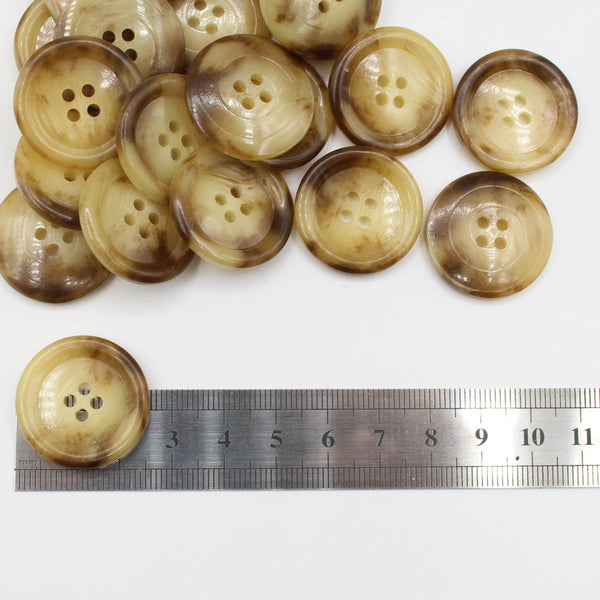
Standard shirt front buttons are usually 11–14mm, while cuff buttons sit slightly smaller at around 10–12mm. For coats and blazers, sizes typically range from 20mm to 24mm.
Are galalith buttons suitable for delicate knitwear?
Yes — galalith buttons are lightweight with a refined marble-effect finish, making them a popular choice for cardigans and fine knitwear where a luxury, non-bulky button is preferred over heavier metal options.
How do I know what size button my pattern needs?
Most commercial patterns specify a button size or buttonhole length on the pattern envelope. If you're working without a pattern, choose a button that's roughly the same width as the buttonhole foot's standard setting, and always sew a test buttonhole on a scrap of your fabric before cutting into your garment.
Can I mix polyester and galalith buttons on the same garment?
It's best to keep visible buttons consistent in material and finish for a polished look, but for hidden or functional buttons (inside cuffs, waistbands), mixing materials is perfectly fine and won't affect the garment's appearance.
How should galalith buttons be cared for?
Galalith buttons can be machine washed at moderate temperatures, but avoid high heat in tumble dryers, as prolonged heat exposure can cause the material to become brittle over time.
104 products